The Brain Behind the Backpack: Building Task Initiation in Kids Who Freeze
Why smart kids can’t “just start”, and the exact routines that unstick them
Sound Familiar?
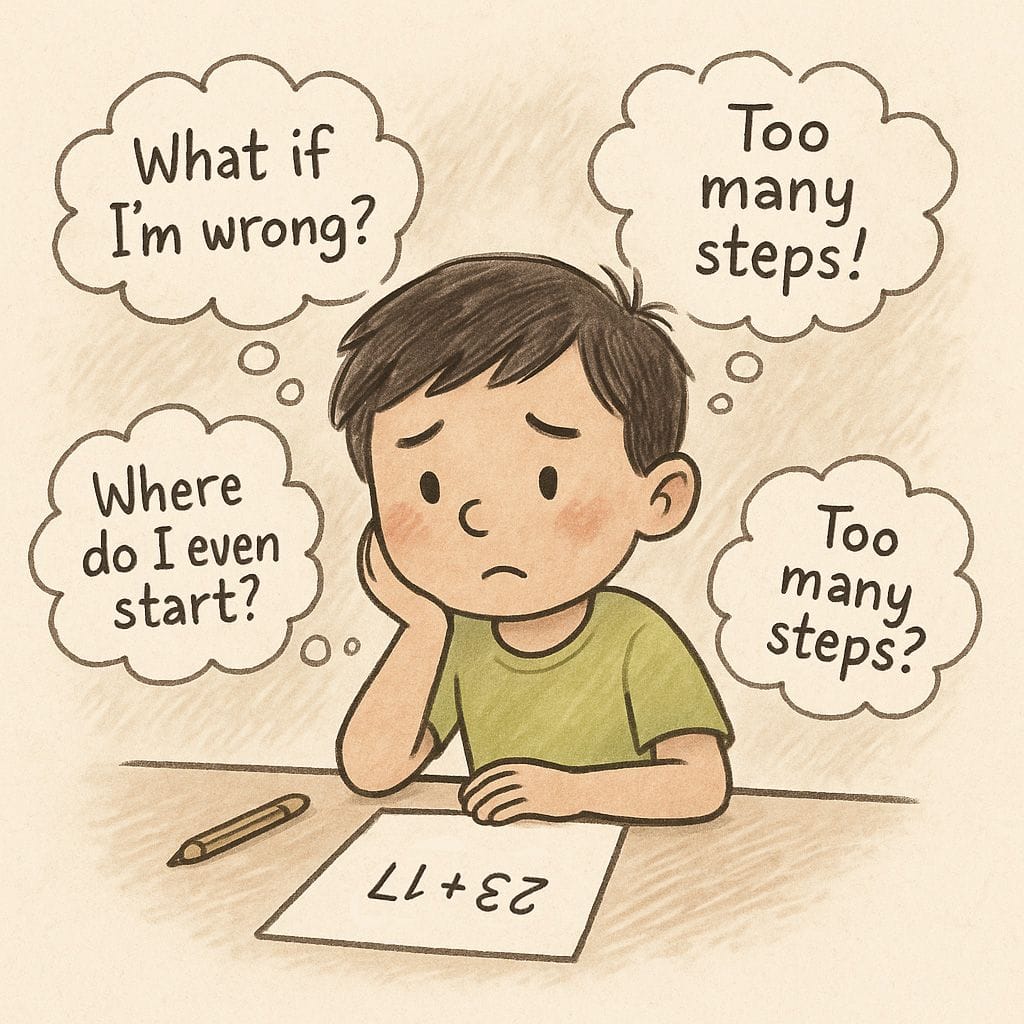
It’s 4pm. Homework has been on the table for 45 minutes. Your child is staring at it, not playing, not watching TV just... frozen. You know they’re smart. You know they understand the work. So why can’t they just begin?
You’re not imagining it, and they’re not being defiant. What you’re watching is a very real gap in executive function called task initiation and the good news is, it’s absolutely teachable.
What Is Task Initiation (and Why Does It Feel So Hard)?
Task initiation is the brain’s ability to begin a task without procrastinating, especially tasks that feel overwhelming, boring, or unclear. It’s one of the core executive function skills identified by researchers Peg Dawson and Richard Guare in their landmark work on children’s self-regulation.
Here’s the key insight: the problem is rarely motivation or ability. It’s almost always about the brain’s “start button” not firing. For many children (especially those with ADHD or anxiety), that button requires a very specific kind of external trigger to activate.
"The brain needs a bridge from the present moment to the task. Without it, inaction is the default." — Inspired by Dawson & Guare, Smart but Stuck (2013)
Why Traditional Approaches Backfire
Before we get to what works, let’s acknowledge what doesn’t:
“Just do it” - This ignores the neurological reality of task initiation
Nagging - Creates emotional noise that makes starting even harder
Removing distractions alone - Necessary but not sufficient; the child still needs a launch point
Rewards without structure - Motivation doesn’t solve a skill deficit
5 Practical Strategies That Actually Work
1. The “First 2 Minutes” Rule
Ask your child to commit to just two minutes on the task not to finish it, just to start. Set a visible timer. This reduces the emotional weight of beginning because the brain isn’t signing up for “homework”; it’s signing up for 120 seconds. Most children continue past the two minutes once momentum builds.
2. Create a Consistent Pre-Task Ritual
The brain loves predictable sequences. A 3-step pre-task ritual (e.g., clear the desk, get a snack, write down the first task) signals the brain that work is coming. Over time this becomes an automatic on-ramp. Keep it short, consistent, and child-designed.
3. Shrink the First Step Until It’s Embarrassingly Small
If the task is “write a book report,” the first step should be “open the book to page 1.” That’s it. Breaking tasks down to micro-actions bypasses the freeze response. In school, this is called scaffolding at home, call it being strategic.
4. Use “Anchor Tasks”
An anchor task is something your child already does without resistance, like making their bed or brushing their teeth. Attach the harder task to it: “Right after you brush your teeth, we start homework.” This uses habit stacking, a technique popularized by James Clear in Atomic Habits, to borrow momentum from established routines.
5. Work Alongside Them (Body Doubling)
Research on ADHD and task initiation shows that having another person present, even if they’re not helping, significantly improves a child’s ability to begin and sustain tasks. Sit nearby doing your own work. You’re not a tutor; you’re a social anchor.
For Educators: Quick Classroom Adaptations
Provide a written or visual version of the first step before asking students to begin independently
Use a class-wide start signal (e.g., a specific song, a countdown timer) to cue task initiation
Offer a choice of starting point within a task, autonomy reduces freeze
Check in quietly with students after 2 minutes rather than at the beginning
The Takeaway
Task initiation isn’t a character flaw or a motivation problem. It’s a skill, one that lives in the prefrontal cortex and develops throughout childhood and adolescence. With the right rituals, micro-steps, and environmental design, the freeze becomes a flow. Your job isn’t to push harder; it’s to build a better launch pad.
Start with one strategy this week. Pick the one that best fits your child’s personality, and give it two weeks before judging its impact.